A talisman is not born. It is made.
Long before it sits against your skin, a talisman is chosen — a stone, a symbol, a shape carried across centuries because it was believed to hold something more than its own weight. To protect. To summon luck. To carry the wearer's intention out into the world, and bring back what they asked for.
The word itself traces back to the Greek telesma — meaning consecration, or the completion of a rite. A talisman was never just decoration. It was a small, deliberate act of faith, worn close to the body so its power could stay close too.

Talisman or Amulet — What's the Difference?
The two words are often used interchangeably, but there is a quiet distinction. An amulet is passive — it protects simply by being worn, a ward against harm. A talisman is active — it is charged with intention, meant to draw something toward you: courage, love, clarity, fortune. One shields. The other summons.
In practice, the line blurs. Most pieces do both — guarding what is precious and inviting what is wanted.
A History Carried on the Body
Every civilisation has kept its own talismans. Ancient Egyptians wore scarab beetles carved from stone, symbols of rebirth and protection, buried with the dead and worn by the living. In medieval Europe, engraved gemstones were believed to channel planetary and celestial power. Across Asia, coins, knots, and animal forms were carried for prosperity and protection from misfortune.
What unites them isn't the symbol, but the gesture — the human instinct to take something small and ask it to carry weight far greater than its size.
The Stone Itself, as Talisman
A talisman need not be carved, engraved, or shaped into symbol at all. Sometimes the stone is enough.
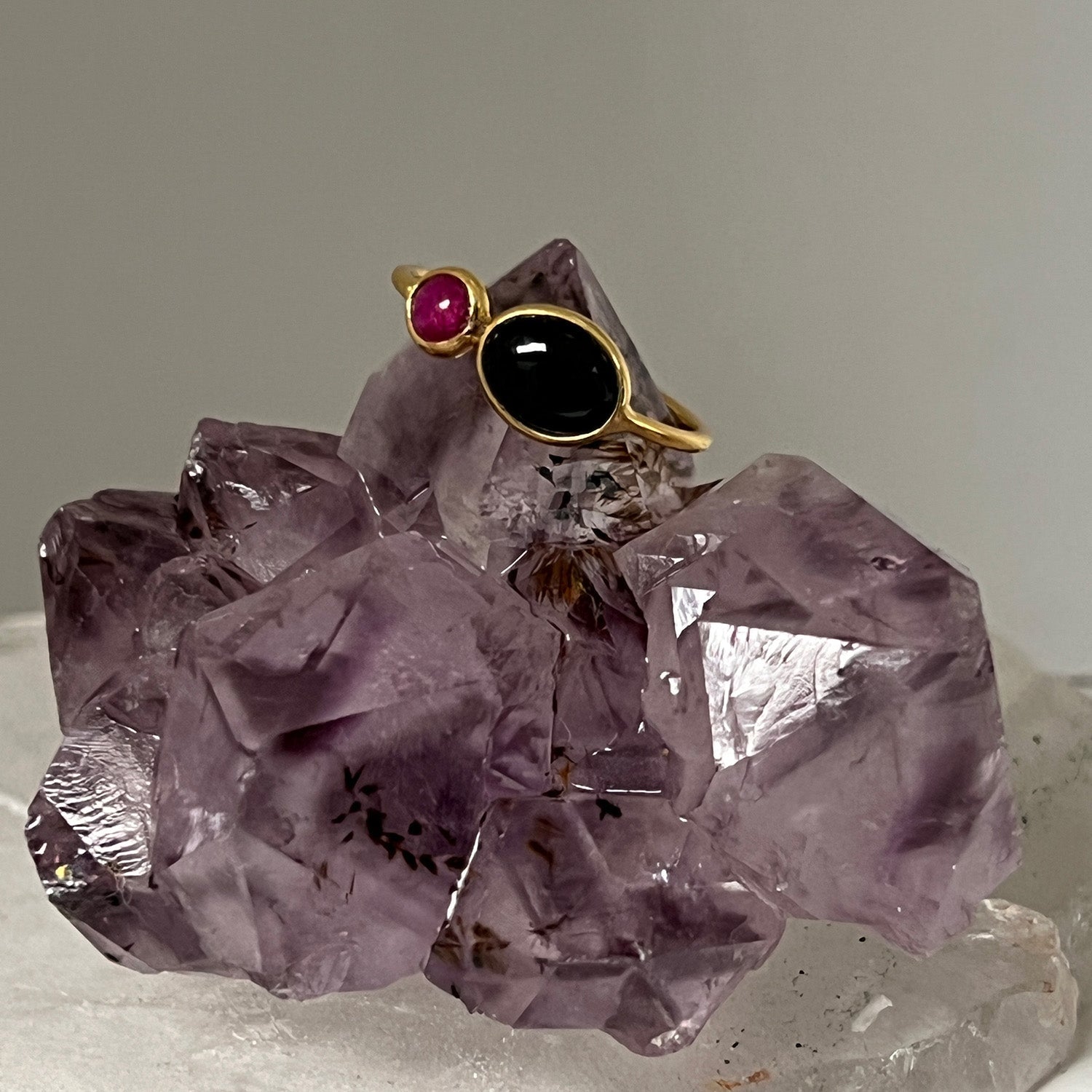
Long before lapidaries learned to cut gems into scarabs and stars, people carried stones exactly as the earth made them — a piece of quartz warmed by the pocket, a raw ruby kept close for courage, moonstone held on nights that needed steadying. The stone was the talisman. Its colour, its origin, the way light moved through it — this was meaning enough, with no symbol required to carry it.
This is the oldest form of talismanic belief: that the earth itself makes objects worth trusting, and the human hand only has to choose which one to keep.

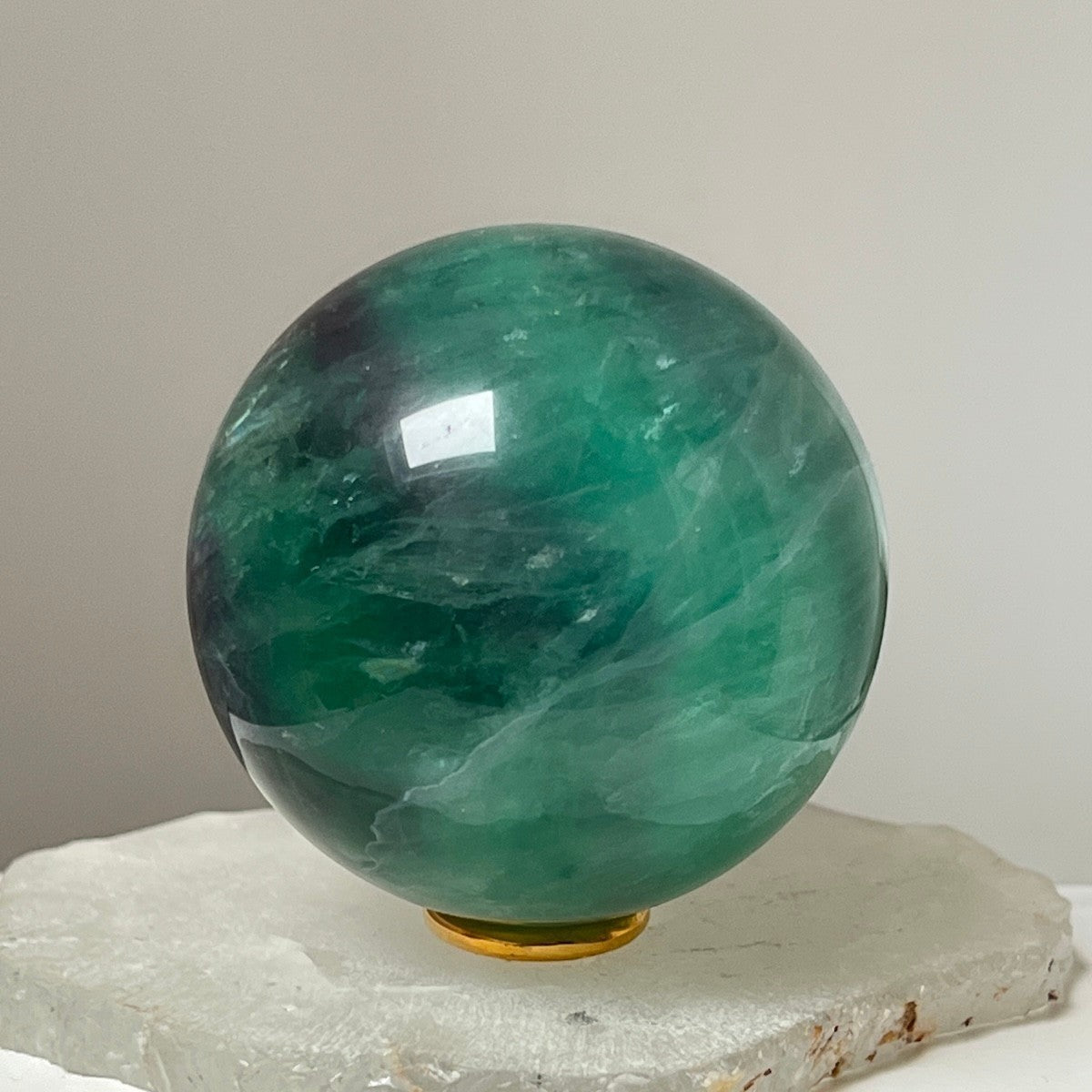
shop Black Tourmaline Sphere
Talismans in Pagan Practice
For pagan traditions, old and modern, the talisman has always held a particular kind of significance — an object attuned to the turning of seasons, the pull of the moon, the character of a particular god or element.
Norse tradition carried runes, each mark a small invocation carved into bone, wood, or metal. Celtic practice favoured knotwork and tree symbols — no beginning, no end, the eternal made visible. Wiccan and modern pagan practitioners still choose stones by lunar phase and elemental correspondence: moonstone for the Goddess and the tides of intuition, clear quartz to amplify what's already being worked, carnelian for the fire and will of the sun.
What runs through all of it is the same instinct: that a talisman, chosen with care, becomes a small altar you can carry — an object attuned not to one moment, but to the ongoing rhythm of ritual, season, and self.

Must a Talisman Be Believed In?
Not everyone who wears a talisman wears it for its meaning. Some are drawn simply to the form — the weight of a stone, the curve of a hand, the old symmetry of a star. There is no rule that says beauty and belief must be separate.
A talisman left on a windowsill catches the light the same way whether or not you've asked anything of it. To display a talisman — on a shelf, at the neckline, wherever it catches the eye — is its own quiet form of reverence. Objects made with intention tend to hold a kind of presence, whether you name it or not.
Wear it for what it means. Wear it for what it is. The talisman does not ask which.

Choosing a Talisman
A talisman should be chosen the way you'd choose a companion — not for what it looks like, but for what it asks of you, and what it offers in return.
Some symbols and stones carry meanings that have held steady across centuries:
-
The evil eye — a ward against envy and ill intention, watching so you don't have to.
-
The hand (hamsa) — protection and blessing, held open toward the world.
-
The star — guidance through uncertainty, a fixed point when the way isn't clear.
-
The moon — cycles, intuition, the quiet power of things unseen.
-
The scarab — transformation, renewal, the self remade.
-
The raw stone — nothing added, nothing carved. Meaning drawn straight from the earth.
The right talisman is rarely the one you search for. It's the one you recognise.

How to Wear a Talisman
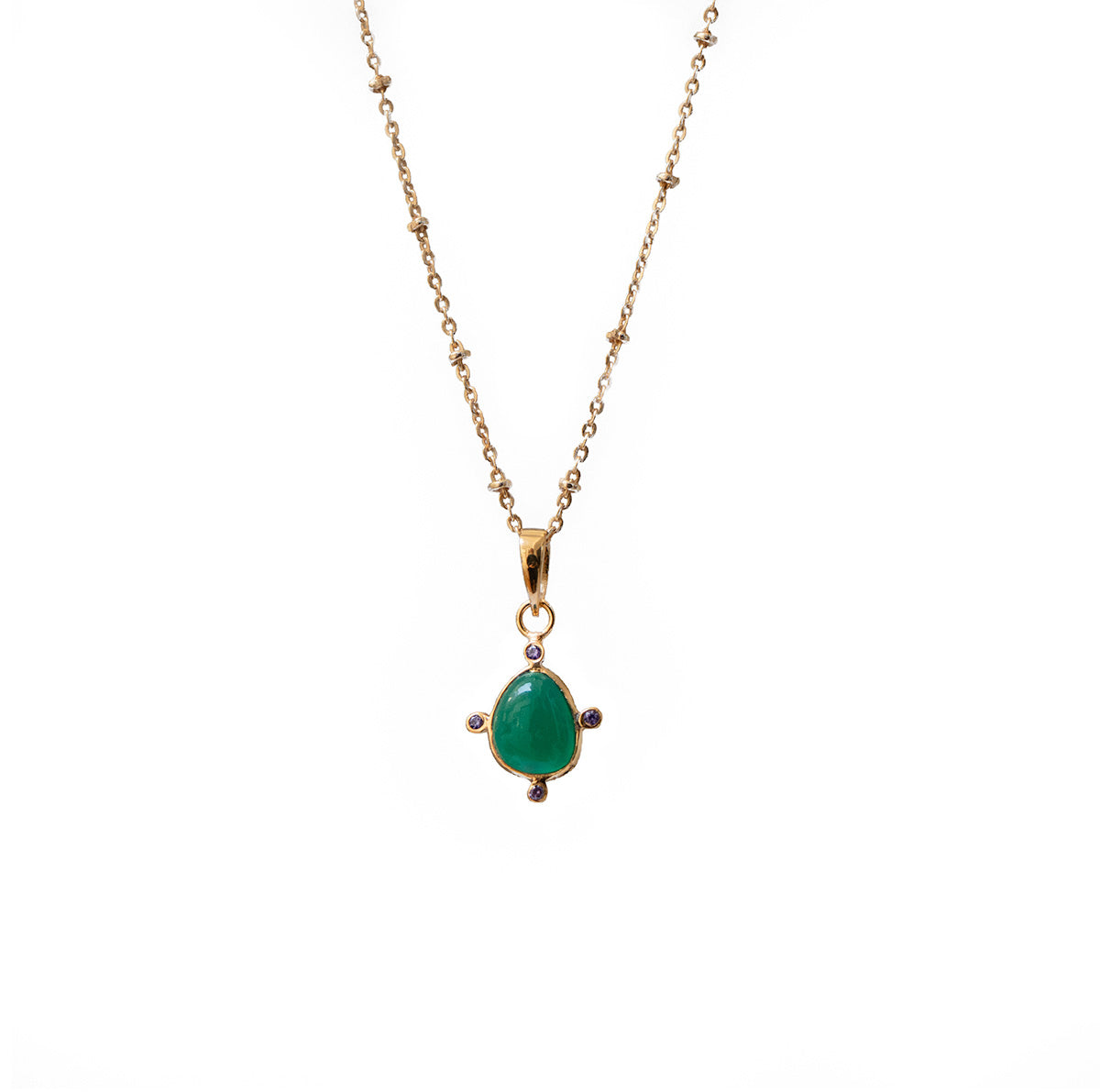
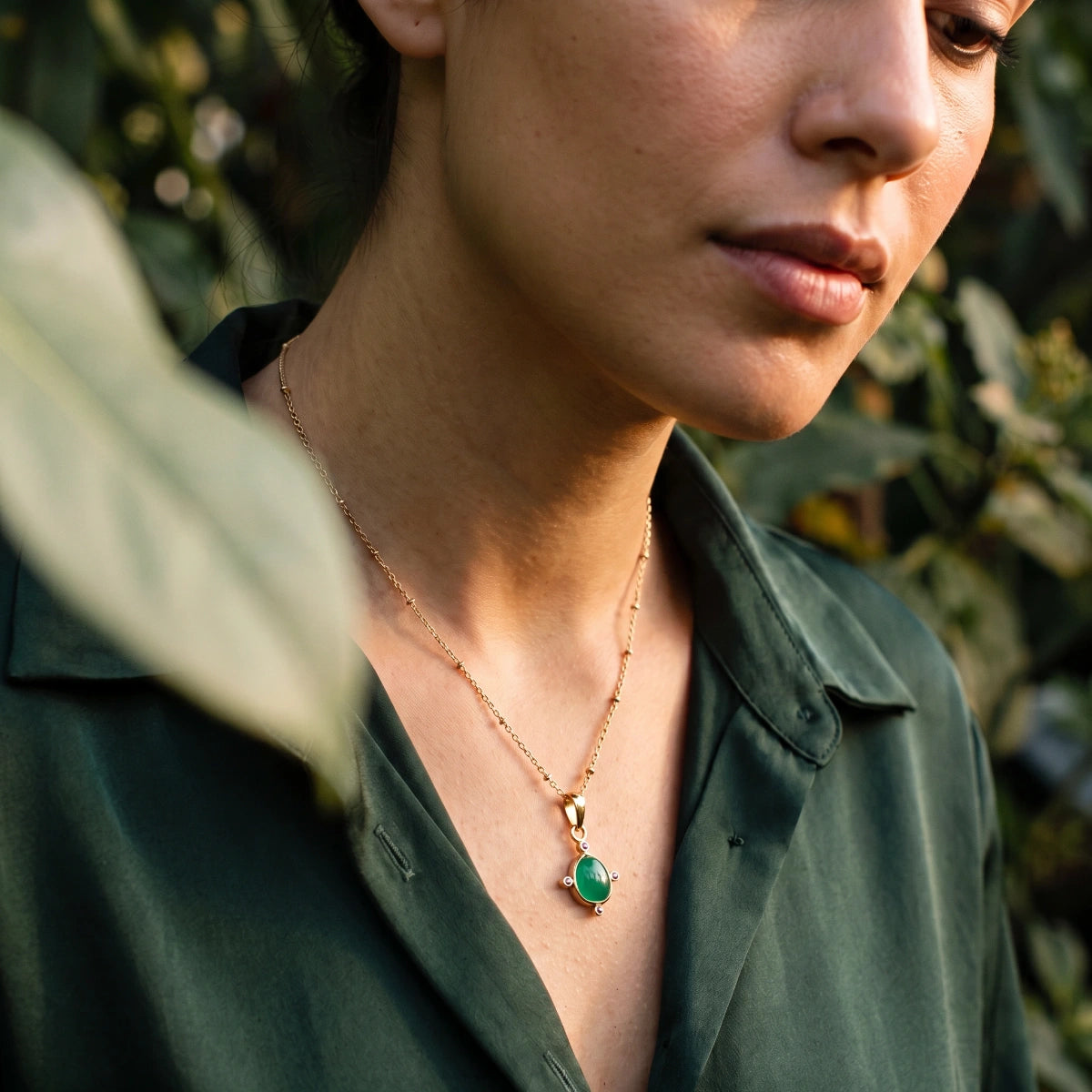
A talisman works closest to the body — at the throat, the wrist, the heart. Worn daily, it becomes less an accessory and more a companion: something touched without thinking, held onto in a difficult moment, a small anchor in the pocket of an ordinary day.
Some choose to set an intention when they first wear a new piece — a quiet moment alone, naming what they hope it will hold for them. There's no correct ritual. Only the sincerity you bring to it.


A Belief, Worn
You don't need to believe in magic to wear a talisman. You only need to believe that some things are worth carrying — protection, hope, the memory of who you want to become. A talisman doesn't do the work for you. It simply reminds you, every time your hand finds it, that you haven't forgotten.

Shop Sweet Crystal Eggs
— Mirabelle