You don't need a reason to wear green. That's the whole point of it. Green isn't a colour you save for occasions — it's a colour you live in, the way you live in a season. Here is how to let more of it into the ordinary days.
Green meaning
On the colour wheel, green sits exactly between yellow and blue — between the sun's heat and the cool of deep water. It is a compromise that never feels like one.
Psychologists will tell you green lowers the heart rate, eases the eye, signals safety. Herbalists will tell you it is the colour of the heart itself — the fourth chakra, the meeting point between the earthly, grounded colours below it and the spiritual, expansive ones above. Both are describing the same thing from different rooms in the same house: green is where the body decides it is allowed to soften.

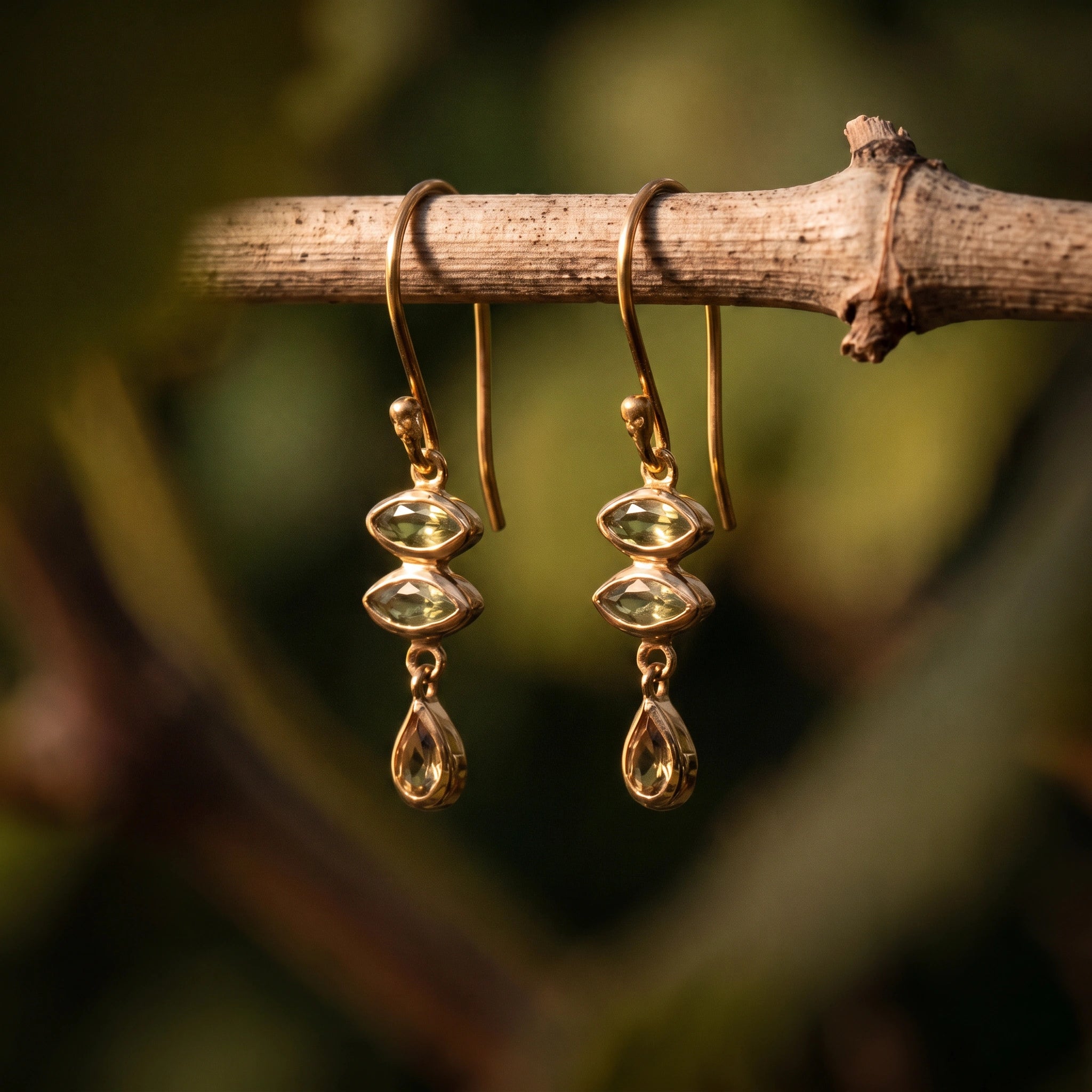
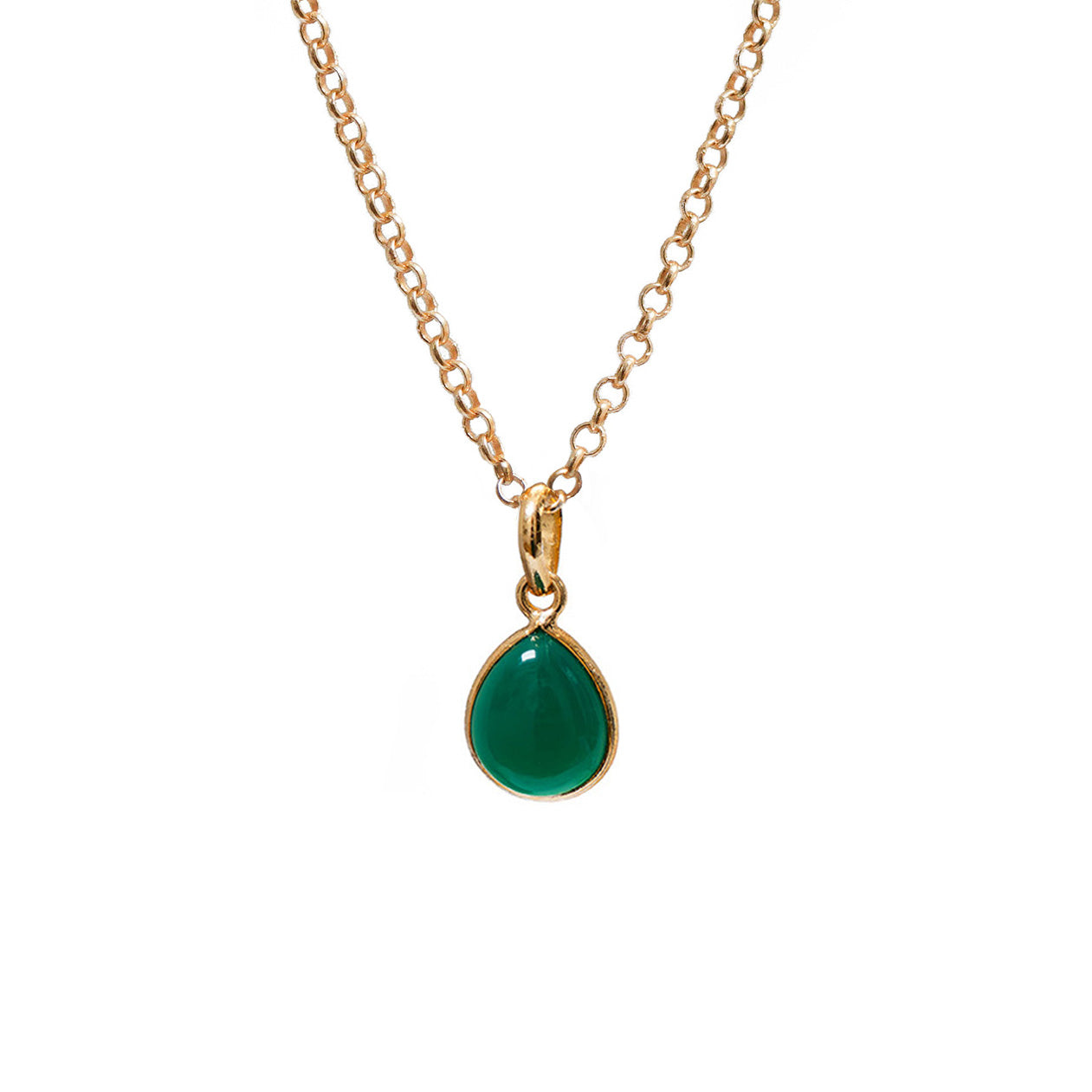
Prehnite drop
The Colour of the Heart Chakra
In the yogic tradition, green belongs to Anahata, the heart chakra — the fourth of seven, the exact midpoint of the body's energetic system. Three chakras sit below it, governing the earthly: survival, desire, will. Three sit above, governing the transcendent: expression, insight, unity. The heart chakra is the hinge between them. It is said to be the place where the physical self learns to love without losing itself, and where the spiritual self learns to stay grounded rather than drift off into abstraction. Green, at that midpoint, is the colour of integration — not choosing between earth and sky, but holding both.
 Felicity ring prehnite and rose quartz
Renewal Without Erasure
Spiritually, green rarely stands for a clean slate. It stands for continuation — growth that carries its history with it. A green shoot doesn't erase the seed it came from; it transforms it. This is why so many traditions link green to rebirth rather than beginnings: the Egyptians painted Osiris, god of the afterlife, with green skin, because resurrection was understood as growth from what came before, not a fresh start apart from it. To wear or sit with green is to be reminded that becoming doesn't require forgetting.

Aventurine Bracelets
The Colour of Balance
Green sits at the centre of the visible spectrum, and something in that physical fact seems to echo through its symbolism. It is neither a hot colour nor a cold one. Spiritually, it's treated as the colour of equilibrium — not stillness, but balance actively maintained, the way a tree holds its shape against wind. Many meditation and healing practices use green specifically to settle an overactive mind or an overwhelmed heart, not by numbing feeling but by giving it somewhere steady to stand.
A Bridge, Not a Destination
Across Celtic tradition, green marked the thin places — the Otherworld, the space where ordinary life brushed against something larger. It wasn’t the colour of arrival. It was the colour of the threshold itself, worn by those who moved between states: the healer, the seeker, the one still becoming. In that sense, green's spiritual meaning has never been about reaching a fixed point. It's about staying open to the passage.

Prehnite pebble double bridge
What Green Asks of You
Every spiritual reading of green points to the same quiet instruction: stay connected to what grows, don't rush the process, and let the heart do its work without shutting either the earth or the sky out. It is a colour that asks for patience more than devotion — the kind of patience a garden requires, or a heart still learning how to open.
Every civilisation that watched a season turn understood green as renewal. The Egyptians carved Osiris — god of death and rebirth — with green skin, because they understood something we sometimes forget: that green is not opposite to endings. It grows because of them. Every green thing you have ever seen was once something else — decayed leaf, spent bulb, dead season — remade.
The Celts called it the colour of the Otherworld, the thin place where this life brushes against the next. Green was worn by those who walked between — healers, wanderers, the ones who didn't quite belong to ordinary time.
In heraldry, green meant hope. Not the soft, wishful kind — the working kind. The hope of someone who has planted a field and must now wait, trusting a thing they cannot see or hurry.
Green Stones worth wearing
We reach for green stones for exactly this reason — not to feel peaceful, but to feel capable of growth. Each one holds the colour differently.
Malachite is green with memory — banded, layered, recording every year like a tree ring. It is said to absorb what no longer serves, transmute it, and hand back something usable. Not gentle. Necessary.
Gita malachite Earrings

Jade is green as endurance. Carved for centuries by hands that understood patience, it has always stood for quiet strength — the kind that doesn't announce itself.
Jade

jade coin
Emerald is green as devotion. The stone of the heart at its most unguarded, worn by those willing to love something enough to be changed by it.
Emerald

Moss agate is green as beginning, over and over. No two pieces the same, each one a tiny landscape mid-grow, unfinished on purpose.
Julia Moss agate

Peridot is green shot through with light — green that has let the sun in rather than shutting it out. It doesn't ask you to be still. It asks you to shine while still becoming.
Ovala Bracelet peridot

Prehnite Not every healing is loud.
Prehnite works the way moss does —
slow, green, covering the broken parts
until they're something else entirely.
Felicity ring prehnite and rose quartz

Aventurine is green as luck, but luck understood correctly — not chance, but readiness. The stone doesn't hand you fortune. It sharpens you so you notice it when it arrives.
Amazonite is green cooled by blue, the colour of truth spoken gently — the courage to say the honest thing without needing it to wound.
Amazonite Points

— Mirabelle